
Beyond Hallucination: Measuring and Managing LLM Reliability in Production AI Systems

Large Language Models (LLMs) are elegant statistical machines. They don’t know facts — they know probabilities.
Each generated token reflects the likelihood of what might come next, drawn from billions of data points. Within this dance of probabilities lurks an ever-present flaw: hallucination.
An LLM hallucination is not a bug — it’s the consequence of probabilistic storytelling. Confident errors emerge when the model stitches together plausible phrases that are either logically inconsistent, factually inaccurate, or contradict external reality.
In mission-critical sectors like healthcare, law, finance, and national security, hallucinations represent catastrophic risks — from incorrect medical advice to fabricated legal precedents. This article goes beyond surface-level advice, offering a deep technical blueprint for understanding, measuring, and mitigating LLM hallucination in production AI systems.
What is Hallucination? Types and Definitions
Expanded Definition
Hallucination describes cases where an LLM:
- Generates confidently false content.
- Contradicts either explicit input context (intrinsic hallucination) or real-world knowledge (extrinsic hallucination).
- Fabricates non-existent entities, events, or sources.
Type
Definition
Example
Intrinsic Hallucination
Contradicts the context provided in the prompt or document
In a medical summary, first states “patient has no allergies” then “patient allergic to penicillin”.
Extrinsic Hallucination
Contradicts factual world knowledge
“Marie Curie was awarded the Fields Medal.”
Fabricated Entities
Invents non-existent people, papers, laws, or organizations
“Professor Jane Eldwin of MIT discovered cold fusion in 2022.”
Overconfident Reasoning
Draws incorrect conclusions based on weak reasoning chains
“Since all primates fly, humans can fly.”
Diagram — Cognitive Path to Hallucination

Structural Causes of Hallucination — Beyond “Missing World Models”
Cause
Description
Token-by-Token Generation
Each token is generated in isolation, encouraging plausible flow over factual accuracy.
Contradictory Latent Knowledge
Training data embeds conflicting or outdated facts, confusing the prediction process.
Ambiguous Prompts
Poorly specified prompts force the LLM to “fill gaps” using likely but unverified content.
Lack of Epistemic Uncertainty
No explicit signal to distinguish “known facts” from “best guesses.”
Example — Partial Uncertainty Handling (Hypothetical API)
response = model.generate(prompt, return_confidence=True)
print(response["text"])
print(f"Confidence: {response['confidence']}%")
Detection Approaches — Comprehensive Framework
Table: Detection Techniques
Approach
Description
Effectiveness
Self-Consistency
Ask the same question multiple times; check for stable answers.
Moderate
Retrieval-Augmented
Verify generated facts against external knowledge sources.
High
Contradiction Checks
Scan output for logical contradictions within the same response.
Moderate
Citation Validation
Require all factual claims to cite retrievable sources.
High
Python — Contradiction Detection via Semantic Similarity
from sentence_transformers import SentenceTransformer, util

model = SentenceTransformer('all-mpnet-base-v2')

def check_consistency(statements):
    embeddings = model.encode(statements)
    similarity = util.pytorch_cos_sim(embeddings[0], embeddings[1])
    if similarity < 0.6:
        print(f"Potential Contradiction Detected: {statements[0]} vs {statements[1]}")

check_consistency([
    "The patient has no allergies.",
    "The patient is allergic to penicillin."
])
Building a Hallucination Test Harness
Purpose
A hallucination test harness wraps an LLM in a monitoring layer that:
- Tracks fact-checking rates.
- Detects self-contradictions.
- Scores citation quality.
- Monitors temporal drift.
Example Test Harness Architecture

Reliability Metrics — Adding Quantified Accountability
Metric
Description
Target
Hallucination Rate
% of responses containing hallucinations
<2%
Citation Completeness
% of factual claims with citations
>95%
Internal Consistency
% of non-contradictory responses
>98%
Confidence Calibration
Correlation between confidence & correctness
>0.90
Case Studies — Real Incidents & Lessons Learned
Company
Incident
Technical Breakdown
HealthAI
Recommended non-existent drug.
Training corpus lacked recent FDA approvals.
LegalBot
Cited fake case law in legal memo.
Poor source attribution pipeline.
FinCorp
Generated conflicting regulatory advice.
Weak self-consistency checks.
Deployment Strategies — Frameworks for High-Reliability Use Cases
Use Case
Recommended Strategy
Customer Service
Self-consistency checks + retrieval-augmented generation (RAG).
Medical AI
Citation validation + domain-specific fine-tuning.
Financial Advice
Real-time regulator database integration.
Diagram — Multi-Layer Hallucination Control Pipeline

Future Trends — Neuro-Symbolic Fusion and Beyond
Trend
Description
Knowledge Graph Fusion
Embed entity relations directly in attention layers.
Epistemic Scoring
Add explicit “known vs guessed” markers to responses.
Self-Repair Loops
Model proposes corrections before user feedback.
Constitutional AI
Embeds self-critique as part of response generation.
Conclusion — Balancing Creativity & Truth
Hallucination isn’t a bug; it’s the inevitable consequence of ungrounded creativity in probabilistic systems. The goal isn’t to eliminate creativity but to surround it with guardrails — balancing factual rigor with generative flexibility.
In the end, reliable AI isn’t about accuracy alone — it’s about knowing what you don’t know.
Related Articles
- AI and Automation
OpenAI's O3 Mini: The New Gold Standard for Free AI Chatbots

OpenAI's O3 Mini is the best free AI chatbot model, offering advanced reasoning, internet access, and superior performance. Compare it with Gemini, Copilot, Claude, and DeepSeek to see why it's the gold standard for free AI models.
- AI and Automation
Building a Retrieval-Augmented Generation (RAG) System Over PDFs Using Docling and Weaviate
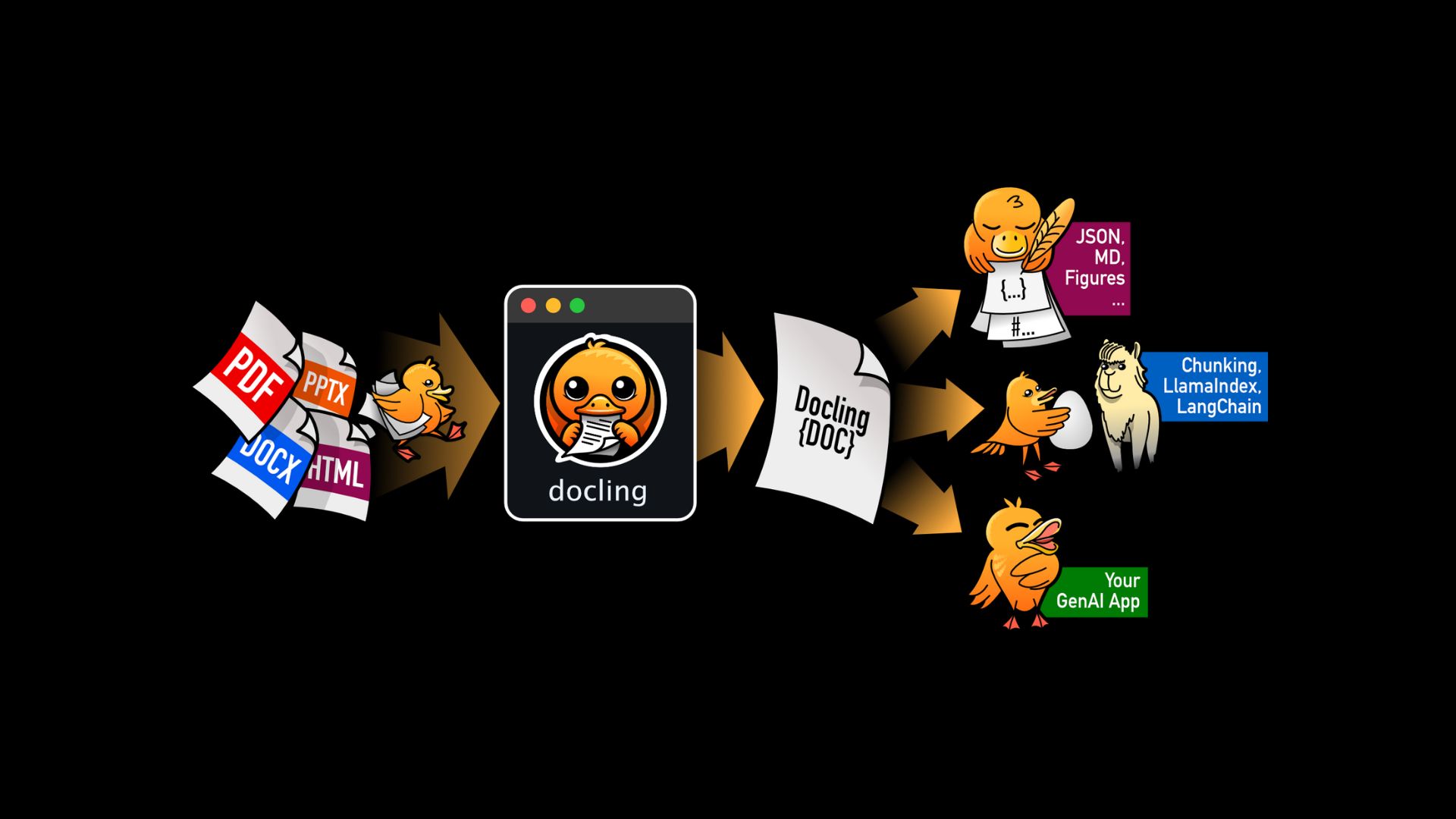
Learn how to implement a Retrieval-Augmented Generation (RAG) system using Docling and Weaviate to enhance large language models by integrating external knowledge from unstructured PDFs.
- AI and Automation
Sora: OpenAI’s Groundbreaking Leap into AI-Generated Video

Discover OpenAI's Sora, the groundbreaking AI video generator redefining content creation. Explore its capabilities, pricing, challenges, and how it compares to competitors like Runway. Is Sora the future of AI-driven video production?
Discussion
Loading discussion...