

Artificial Intelligence (AI) is revolutionizing education, reshaping how knowledge is acquired, retained, and applied. At the forefront of this transformation is Google’s LearnLM, a specialized AI model within the Gemini API, designed to optimize educational applications through adaptive, interactive, and multimodal learning.
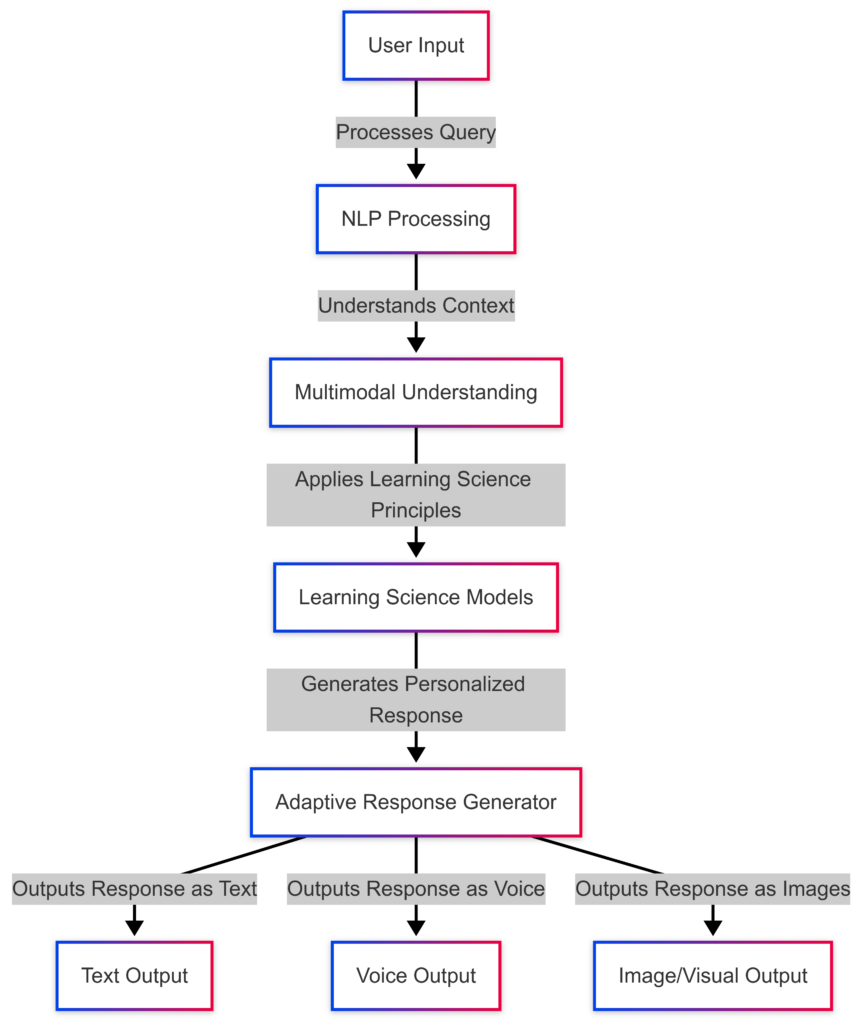
Unlike general-purpose AI models, LearnLM is meticulously fine-tuned with pedagogical principles, focusing on active learning, cognitive load management, and content personalization. It supports text, voice, images, and structured data, making it a versatile tool for developers, educators, and e-learning platforms.
This article will explore:
- ✅ The inner workings of LearnLM
- ✅ How to integrate LearnLM using the Gemini API
- ✅ Real-world applications in AI-powered education
- ✅ Best practices for optimizing LearnLM models
- ✅ Challenges, limitations, and future trends
What is LearnLM?
Overview
LearnLM is a core component of Google’s Gemini ecosystem, built to enhance educational experiences through cutting-edge Natural Language Processing (NLP), multimodal learning, and AI-driven tutoring.
Key Capabilities of LearnLM
- 🔹 Active Learning – Encourages learners to engage with content dynamically rather than passively consuming information.
- 🔹 Cognitive Load Management – Structures content delivery efficiently to prevent information overload.
- 🔹 Adaptive Learning Paths – Customizes learning journeys based on user responses, curiosity, and progress.
- 🔹 Multimodal Input Handling – Processes text, voice, images, and structured data for immersive education.
- 🔹 Contextual Knowledge Retention – Uses reinforcement techniques, follow-up questions, and incremental difficulty scaling to solidify understanding.
How to Use LearnLM with the Gemini API
Step 1: Setting Up Your Gemini API Project
To start using LearnLM, you need to create a Google Cloud project and enable the Gemini API.
- Visit Google Cloud Console
- Create a new project (or select an existing one)
- Enable the Gemini API (via APIs & Services > Library)
- Generate an API Key (via APIs & Services > Credentials)
Step 2: Interacting with LearnLM via API
LearnLM is accessed using RESTful API calls, making it ideal for chatbots, AI tutors, and knowledge assistants.
Example: Querying LearnLM via API (Python)
import requests
import json

API_KEY = "YOUR_GEMINI_API_KEY"
url = "https://api.ai.google.dev/v1/learnlm/generate"

headers = {
    "Authorization": f"Bearer {API_KEY}",
    "Content-Type": "application/json"
}

data = {
    "input": "Explain Newton's laws of motion in simple terms.",
    "output_format": "structured_text",
    "adaptive_learning": True,
    "student_level": "High School",
    "learning_style": "Visual"
}

try:
    response = requests.post(url, headers=headers, json=data)
    response.raise_for_status()
    print(json.dumps(response.json(), indent=4))
except requests.exceptions.RequestException as e:
    print(f"Error: {e}")
    if response.status_code != 200:
        print(f"Response Body: {response.text}")
except json.JSONDecodeError as e:
    print(f"Error decoding JSON response: {e}")
Key Takeaways from the API Request
- ✔️ Well-structured JSON request ensures LearnLM interprets input correctly
- ✔️ Adaptive learning enabled for personalized responses
- ✔️ Multiple learning parameters (e.g.,
student_level,learning_style) for customized interactions - ✔️ Enhanced error handling for robust API performance
Use Cases: How LearnLM Can Transform Learning
1. AI-Powered Tutoring Chatbot
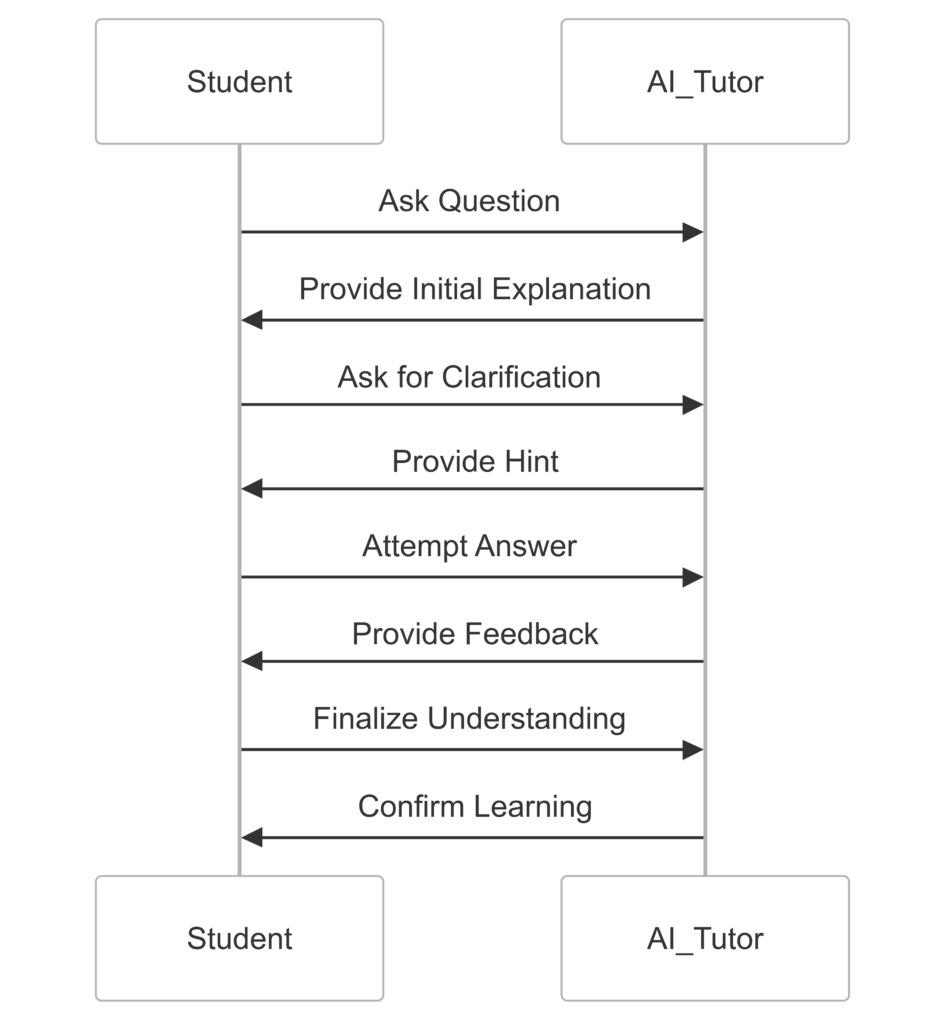
🔹 Personalized AI tutor that adapts dynamically based on student performance.
🔹 Example:
{
    "input": "Teach me about Pythagorean Theorem.",
    "student_level": "High School",
    "interactive_mode": true
}
LearnLM provides an adaptive explanation, asks practice questions, and tracks learning progress.
2. Personalized Learning Content Generation
🔹 Generate different learning materials based on user preferences.
🔹 Example:
{
    "topic": "Photosynthesis",
    "learning_style": "Visual",
    "output_format": "summary_with_images"
}
LearnLM generates a structured breakdown with interactive diagrams.
3. AI-Driven Language Translation for Education
🔹 Translate learning materials while preserving their educational intent.
🔹 Example:
{
    "text": "Gravity is the force that pulls objects toward each other.",
    "target_language": "French"
}
Output: "La gravité est la force qui attire les objets les uns vers les autres."
4. Interactive Knowledge Assistant
🔹 Acts as a research assistant, providing context, references, and deeper insights.
🔹 Example:
{
    "question": "What are the main causes of climate change?",
    "output_format": "detailed_explanation"
}
LearnLM generates a structured response with citations and related concepts.
Best Practices for Training LearnLM Models
1. Optimize Data Quality
- ✔️ Use high-quality, diverse, and bias-free training datasets
- ✔️ Ensure data augmentation for better generalization
2. Fine-Tune Hyperparameters
- ✔️ Adjust learning rate, batch size, and prompt formats
- ✔️ Experiment with few-shot learning and transfer learning
3. Evaluate AI Performance
- ✔️ Measure accuracy, knowledge retention, and student engagement
- ✔️ Monitor bias and fairness in AI-generated responses
4. Improve Explainability
- ✔️ Develop transparent AI models that explain reasoning
- ✔️ Provide clear citations and step-by-step answers
Challenges and Limitations
- Experimental Stage – Not yet optimized for large-scale production
- Potential AI Bias – May generate unintended biases in responses
- Explainability Issues – Requires better AI interpretability for education
The Future of AI in Education
- 🚀 Hyper-Personalized AI Tutors – AI that adapts to individual learning pace and emotions
- 🚀 Multimodal Learning Innovations – AI-driven VR/AR for immersive education
- 🚀 AI-Assisted Curriculum Development – Dynamic lesson planning and adaptive learning pathways
Conclusion
Google’s LearnLM is setting the benchmark for AI-driven education, offering adaptive and multimodal learning through the Gemini API. By leveraging cutting-edge AI, developers can create next-gen educational tools, including intelligent tutoring systems, content generators, and interactive assistants.
For developers and educators, LearnLM provides a powerful foundation for building the future of AI-enhanced education. Start experimenting with the Gemini API today and redefine the way we learn.




Leave a Reply